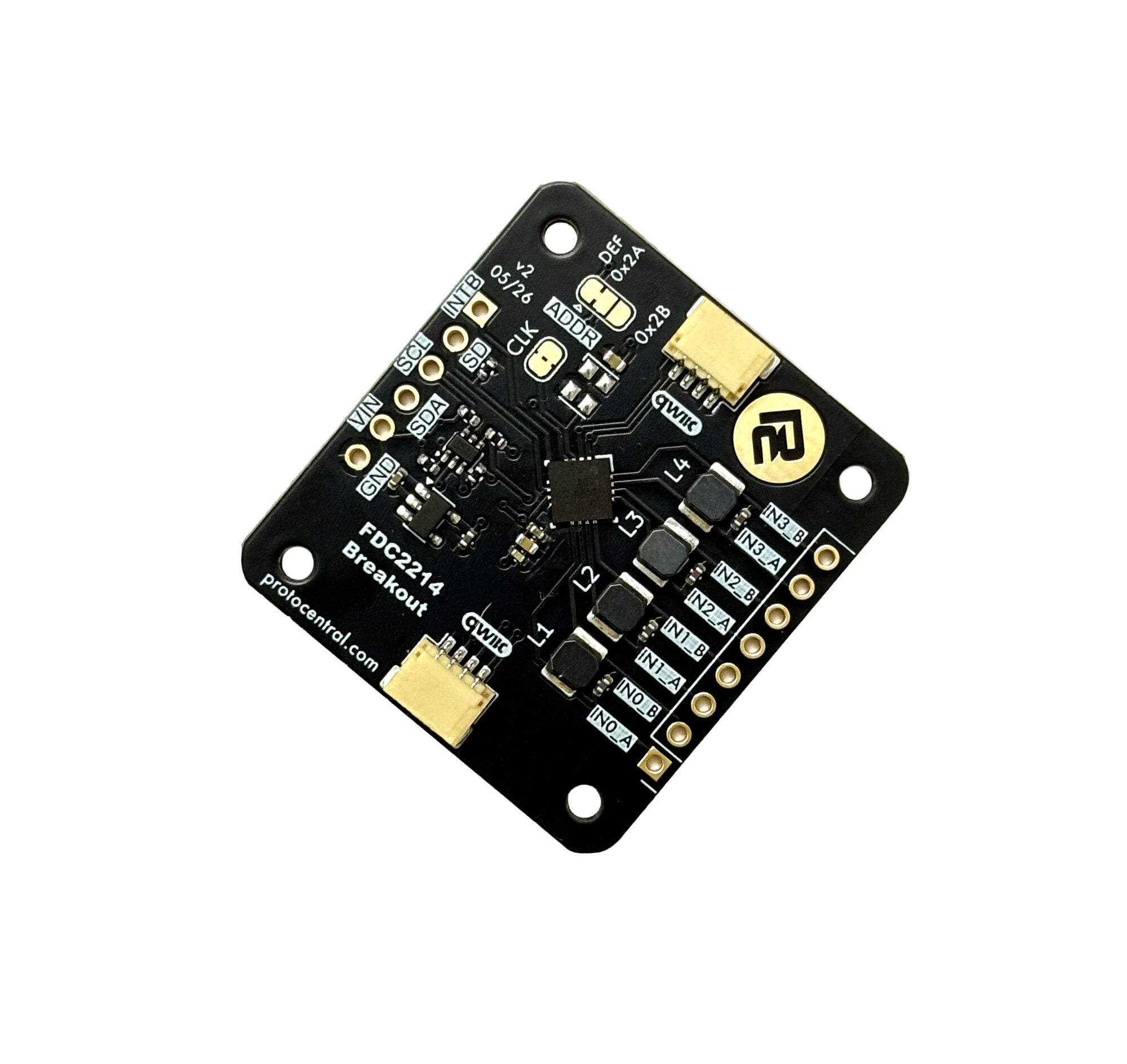
ProtoCentral FDC2214 capacitance-to-digital converter breakout board, angled view

What Can You Build With the FDC2214? 12 Applications, and Where It’s the Wrong Chip

The FDC2214 doesn’t measure capacitance directly — it measures the resonant frequency of an LC tank, and that one design choice decides what it’s good at. Here are twelve things you can build with it, from liquid level to micron-scale displacement, with the numbers behind each one and the places where a different chip would serve you better.
HealthyPi Move watch and HealthyPi 6 board side by side, above the MCUmgr and Zephyr wordmarks

We Stopped Inventing Sync Protocols: Building a Custom MCUmgr Group in Zephyr

Our watch moved health data over a hand-rolled BLE service with its own framing. We deleted it and implemented the same feature set as a custom MCUmgr management group instead — about forty lines of registration boilerplate, and the transport, framing, retries and client tooling came free. Here’s how you extend MCUmgr in Zephyr, what it bought us on HealthyPi Move, and what happened when we did the same thing again on HealthyPi 6 — a different SoC, a different command set, the same forty lines.

A HealthyPi Move worn on the wrist, photographed slightly off-axis so the AMOLED reads as true black. The NEXT digital watch face is lit: “MON, AUG 3”, a battery reading of 82%, the time 5:16 PM, and two complications below it — 82 BPM and 16 steps — over a procedural dial of amber radial ticks.

HealthyPi Move NEXT: Same Device, New Everything

HealthyPi Move NEXT is mostly a free over-the-air update to every Move ever shipped — a health-data layer rebuilt on MCUmgr, epoch aggregation that takes on-device retention from 1.2 days to 104, continuous HRV, and a redrawn watch UI. There’s also a redesigned optical stack, but that one’s a board change. Here’s how both work.